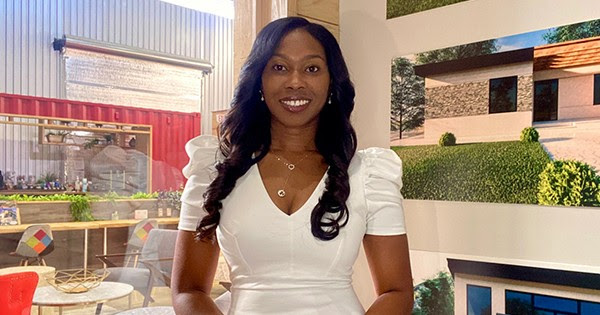












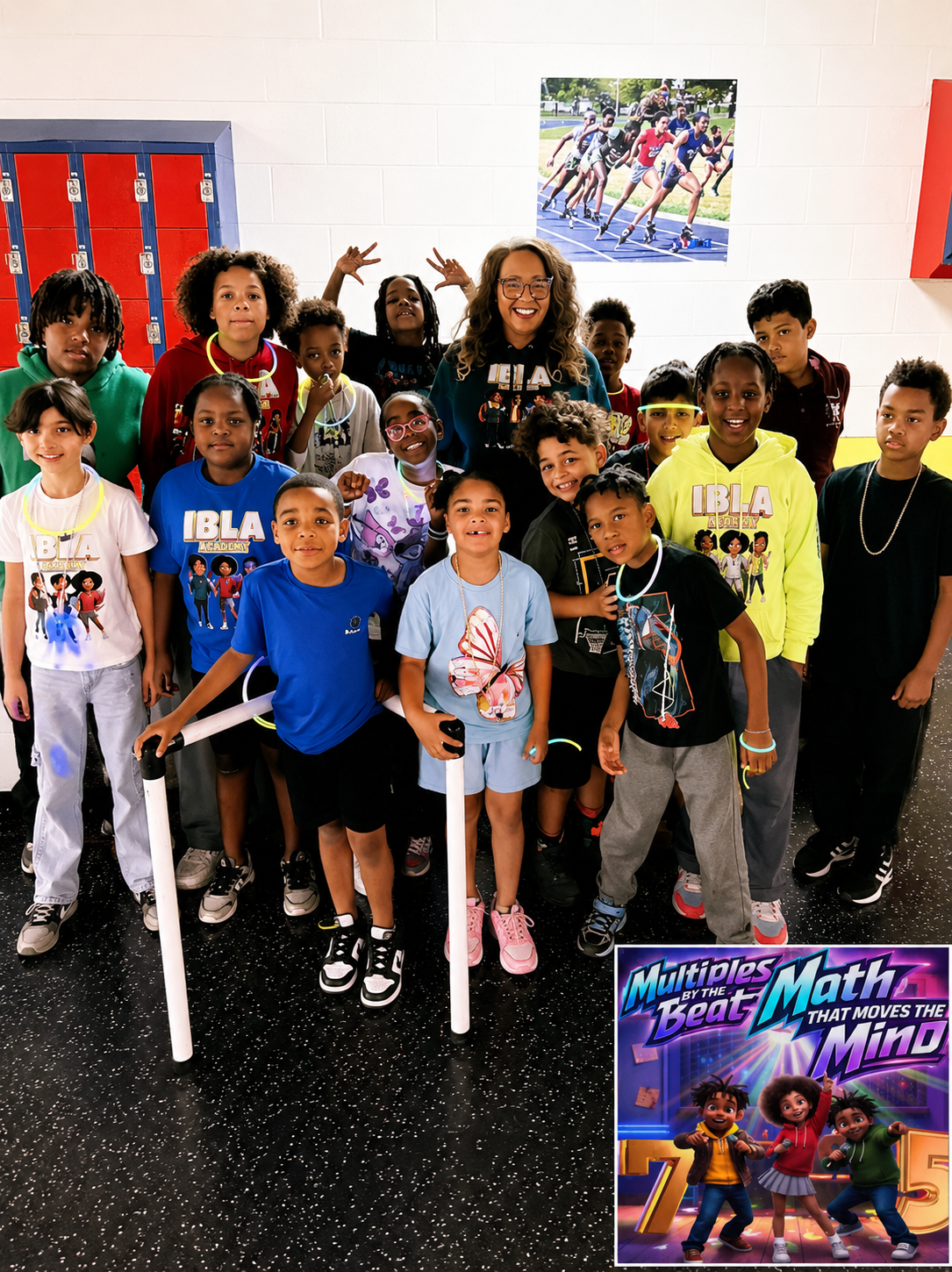
In a classroom where students are singing, counting, and moving instead of simply memorizing, math is becoming more engaging and easier to understand. Niah Spriggs, an African American educator in Oklahoma City, is using music as a creative teaching tool to help students strengthen math confidence through her new album, Multiply the Beats: Math That Moves.
The album is now available on major platforms, including YouTube, Apple Music, and Amazon Music. Families, educators, and community supporters can visit YouTube to hear samples and experience how rhythm, repetition, and number patterns can help students better understand multiplication.
Support for the project was provided in part through an American Rescue Plan Act grant from the Oklahoma County Commissioners, reflecting a meaningful community investment in student learning, innovation, and educational access.
Multiply the Beats: Math That Moves focuses on helping children build numeracy, which is the ability to understand how numbers work. Through rhythm and repetition, students learn multiplication, skip counting, multiples, and number patterns in a way that feels natural and memorable.
Instead of relying on memorization alone, the music helps students hear how numbers connect. When children sing multiplication patterns repeatedly, they begin to internalize the structure of math. This approach can help reduce fear, increase confidence, and make foundational concepts easier to retain.
“Students don’t struggle because they can’t learn math; they struggle because they don’t always see how numbers connect,” said the program creator and IBLA founder. “When students hear the patterns in music, they begin to understand the patterns in numbers.”
Research has shown that strong early math skills are closely connected to later academic success. By helping students build confidence with numbers early, Spriggs’ music-based learning approach supports long-term educational growth.
Inside classrooms using this method, students actively participate by singing, counting aloud, clapping rhythms, and identifying number relationships. These activities help learners move beyond memorization into deeper understanding. As students repeat the songs, they strengthen fluency and begin solving problems with greater accuracy.
The songs help students develop key math skills, including:
- Recognizing multiples and skip counting
- Understanding number patterns
- Building multiplication fluency
- Strengthening confidence with numbers
- Preparing for division, factors, and fractions
The album is part of a broader educational approach that emphasizes understanding before memorization. By helping students recognize how numbers grow and relate to one another, Multiply the Beats gives learners a stronger foundation for more advanced math concepts.
Parents and teachers can also access instructional videos on YouTube that show how the method is used in real classroom settings. These videos provide practical examples for families and educators who want to make math more engaging, creative, and accessible.
A community celebration event for students and families will be held on June 6, highlighting how music can support learning while bringing joy, movement, and confidence into the classroom.
At a time when many families and educators are concerned about student performance in math, this project offers a fresh and practical solution. Through music, students are not only learning multiplication; they are building confidence, strengthening foundational skills, and discovering that math can be fun, rhythmic, and empowering.
Website / Music: Follow Multiply the Beats: Math That Moves on YouTube and major music platforms.
About Niah Spriggs
Niah Spriggs is an Oklahoma City educator dedicated to helping students develop strong numeracy skills through pattern-based learning, music, and creative classroom instruction. She currently leads I Believe Learners Academy and Scholars Circle Community Tutoring Program. Her Multiply the Beats project is part of a broader effort to improve math understanding by helping students recognize how numbers relate, grow, and connect throughout Oklahoma City.